





Access to your account to proceed
Le Corbusier
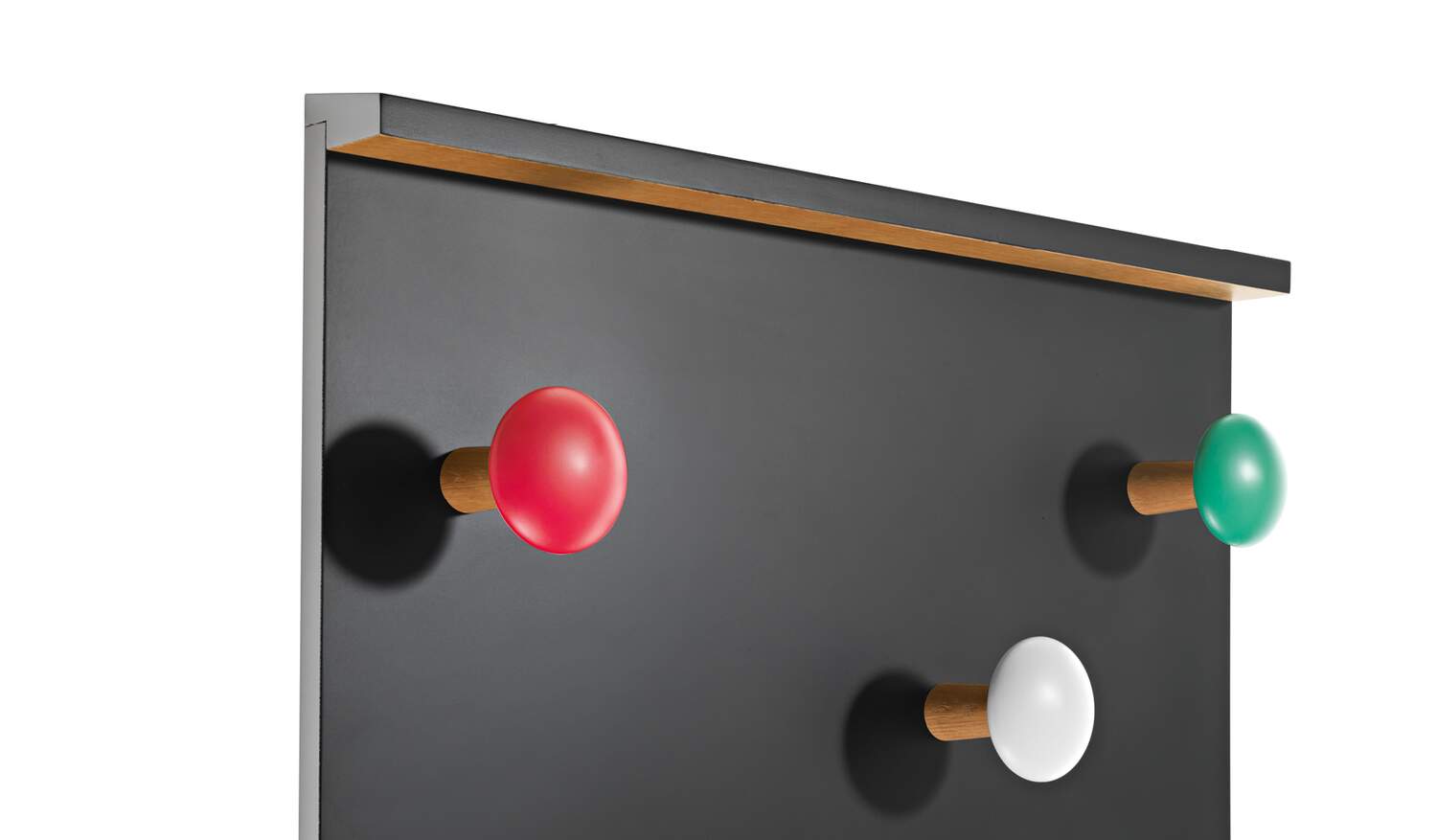
The Cassina re-edition introduces the design coat rack by Le Corbusier, coordinated with the polychromy of minimal spaces like that found in the comfort of a cruise cabin.
The piece is made of solid oak with knobs like mushroom-caps spaced at different heights, based on the Modulor scale of proportions.
DESIGN BY
PRODUCT CARE AND MAINTENANCE
In this manual you will find some recommendations for the care and maintenance of your Cassina products.
The materials are divided into different categories; each one is accompanied by its own information sheet with instructions, preventative measures and methods for cleaning.
Downloads
Access 2D and 3D drawings, technical sheets, and complete documentation to explore every detail of our products.
Designed for professionals and those seeking in-depth information.
2010
This coat-rack was originally created by Le Corbusier for the Cabanon, a summer-house on the Cote d’Azur that he designed in 1951 as a birthday present for Yvonne, his wife. This re-issue by Cassina is based on the 1957 version, which had been made for the Unités de Camping, which was next to the Cabanon. In line with the bright colours used for these minimal spaces, keyed on the compact comfort offered by a cruise-ship cabin, the coat-rack too was multi- hued. The base is made of oak, while the hooks are mushroom-shaped, and are placed at varying heights, based on the criteria established in the Modulor.
I MAESTRI
Charles-Edouard Jeanneret, known as Le Corbusier, was born at La Chaux-de-Fonds, in the Swiss Jura, in 1887; he died in France, at Roquebrune-Cap-Martin, on the French Côte d’Azur, in 1965.Early in his career his work met with some resistance owing to its alleged «revolutionary» nature and the radical look it acquired from its «purist» experiments; in time , however, it won the recognition it deserved and it is still widely admired. His message is still being assimilated by an ever increasing number of people in the profession, but his far-out avant-garde attitudes should be interpreted with due consideration for the use of rational systems in his planning method, evidenced by extremely simple modules and formes based on the functional logic.
Read more.
Access to your account to proceed